

The Universal In-Roof Mounting System
Advanced in-roof photovoltaic mounting system designed to combine architectural integration, structural performance and long-term sustainability.
It goes far beyond a standard mounting tray by delivering a fully engineered, certified and scalable solution for the residential and new-build markets.
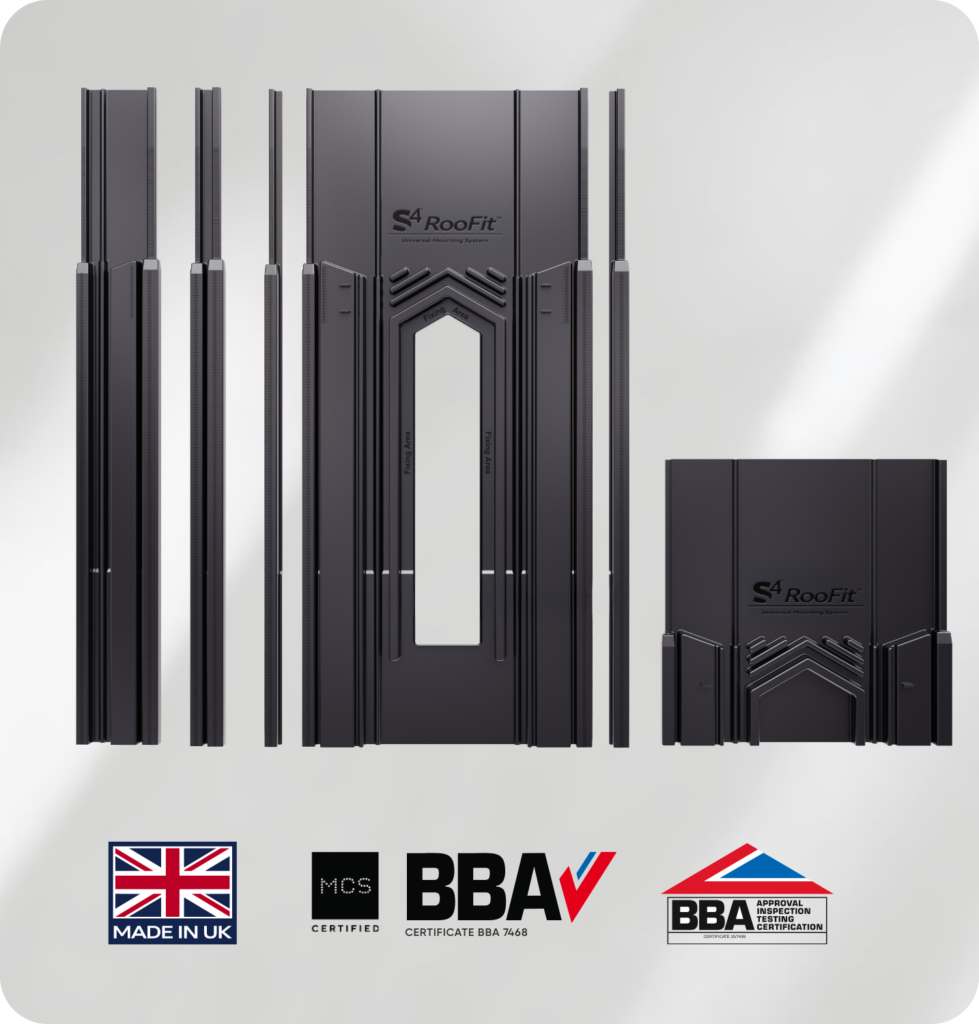
A truly universal in-roof system
- All current photovoltaic panel sizes,
- Future panel formats,
- Both portrait and landscape installations.
- A single reference to manage across projects,
- Simplified design and installation,
- Full compatibility with market evolution without system redesign.
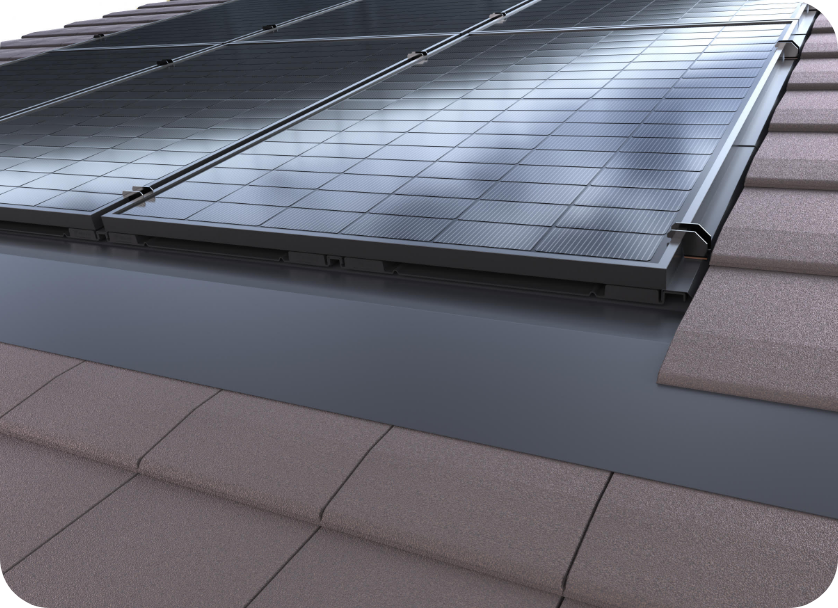
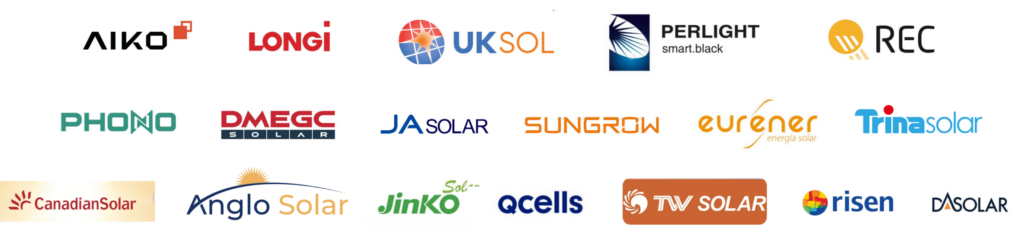
Compatibility with leading photovoltaic panel manufacturers
Thanks to its universal design, S4 Roofit can be used with all photovoltaic panels available on the market, including those supplied by leading international manufacturers.
These manufacturers rely on proven industrial processes, combining highly qualified production lines, rigorous quality controls and internationally recognised certifications. The use of such panels ensures a high level of reliability, consistency of performance and long-term durability.
When combined with panels from these established manufacturers, S4 Roofit delivers a coherent and robust solution, meeting some of the highest levels of market expectation in terms of quality, regulatory compliance and long-term performance, in line with the requirements of UK housebuilders.
Engineered for strength and durability
- Pressure loads,
- Wind uplift (depression),
- Long-term structural stress.
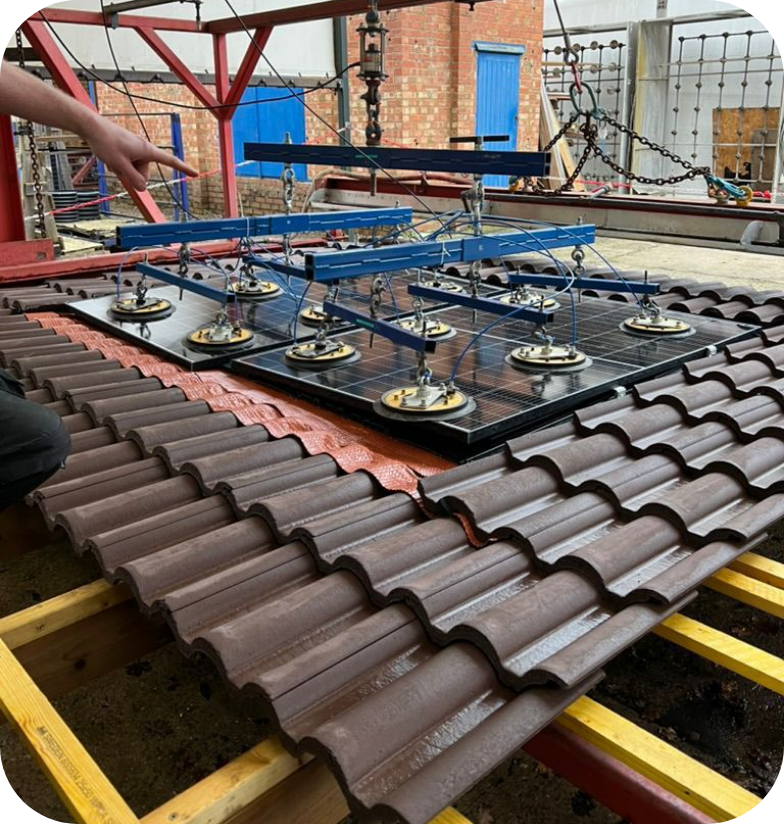
Certified, compliant and future-proof
- MCS 012 certified,
- BBA assessed, confirming compliance with NHBC Standards.
- Regulatory compliance,
- Robustness of the system,
- Suitability for UK housebuilders and new-build requirements.
Industrial efficiency with local focus
- Controlled tooling investment,
- Local production where required,
- Reduced transport distances,
- Faster delivery times.
- Lower logistics impact,
- Improved supply chain resilience,
- Reduced environmental footprint.

Simplified installation & inventory
- One system for all panel sizes,
- No distinction between portrait and landscape kits,
- Reduced SKU count,
- Faster installation,
- Simplified stock management.
Different Design Approaches Explained
The UK in-roof photovoltaic market includes several system design approaches.
Understanding these differences is essential for house builders, designers and procurement teams when assessing long-term performance, compliance and supply chain resilience.
The comparison below outlines key distinctions between proprietary panel-based in-roof systems and universal in-roof mounting platforms, to support informed specification decisions.
Comparison of System Design Approaches
| Criteria | Proprietary panel-based systems | S4 Roofit – Universal In-Roof System |
|---|---|---|
| System architecture | Designed around specific photovoltaic panels | Universal, panel-agnostic mounting platform |
| PV module selection | Limited to a defined panel range | Compatible with panels from major global manufacturers |
| Certification structure | Panel-dependent validation | Single system certification ,framework |
| Adaptation to future panels | Requires re-validation | Designed to accommodate future panel formats |
| Installation methodology | Panel-specific processes | Standardised, repeatable installation |
| Component complexity | Multiple product-specific components | Reduced component architecture |
| Stock management | Multiple SKUs | Single-reference system approach |
| Supply chain dependency | Tied to specific panel suppliers | Open and flexible supply chain |
| Long-term availability | Linked to panel lifecycle | Independent from panel lifecycle |
System-Level Safety & Compliance Approach
“Fire performance, electrical safety and system integrity are addressed at system level through
independent certification frameworks, rather than through the addition of isolated components.”
This system-level approach avoids reliance on add-on mitigation products by addressing safety,
performance and compliance through certified system design.
Design Philosophy
Proprietary in-roof systems are typically developed around a specific photovoltaic panel range.
While this approach can offer integration simplicity, it may also introduce long-term dependency on individual panel suppliers and product lifecycles.
Universal in-roof platforms, such as S4 Roofit, are engineered independently from the photovoltaic panels themselves.
This approach allows integration with leading global panel manufacturers operating highly industrialised, certified and continuously evolving production processes.
As a result, the system benefits from:
- access to panels produced at the highest industrial standards,
- continuity of supply,
- long-term compatibility with market evolution.
System Architecture & Component Strategy
- The industrial quality of photovoltaic modules,
- Compliance with international standards (IEC 61215 / IEC 61730),
- Consistent manufacturing processes,
- And a robust, system-level integration approach.
This approach ensures:
- Consistent electrical and mechanical quality,
- Traceable manufacturing processes,
- Long-term product availability,
- Alignment with international certification frameworks.
Certification & Regulatory Alignment
- MCS 012 certified
- BBA assessed, confirming compliance with NHBC Standards
- system robustness,
- regulatory compliance,
- suitability for UK housebuilders and large-scale residential deployment.
Summary
Different in-roof photovoltaic solutions reflect different design philosophies.
S4 Roofit has been developed as a universal, certified and future-proof in-roof system, offering housebuilders a robust alternative to panel-specific solutions,
while maintaining flexibility, regulatory alignment and long-term supply chain resilience.
The system architecture of S4 Roofit is the result of long-term market observation and practical experience in building-integrated photovoltaics.
France was among the earliest European markets to adopt Building-Integrated Photovoltaics (BIPV) at scale.
This early adoption generated valuable long-term feedback on system behaviour, durability and roof integration over time.
Early-generation BIPV systems highlighted several key industry challenges, including installation complexity, long-term watertightness, maintenance requirements and reliance on proprietary components.
They also underlined the importance of system architectures capable of maintaining roof watertightness even in the event of a localised module failure, such as a damaged or broken panel.
These market learnings have played a significant role in shaping the evolution of in-roof photovoltaic design standards across Europe.
S4’s system architecture directly builds on this accumulated experience, adopting a second-generation approach focused on system robustness, simplified installation, long-term compatibility and regulatory continuity.
The design philosophy of S4 Roofit prioritises a watertightness strategy that is independent of the photovoltaic module itself, ensuring continued building protection during maintenance, replacement or in the event of module failure.
This experience-led development philosophy underpins S4’s positioning and supports its suitability for large-scale residential deployment.
This comparison is provided for informational purposes only and reflects general system design approaches observed in the UK in-roof photovoltaic market. It does not constitute a claim regarding the performance or compliance of any specific third-party product.
A platform built for compliance, accuracy, and reliability
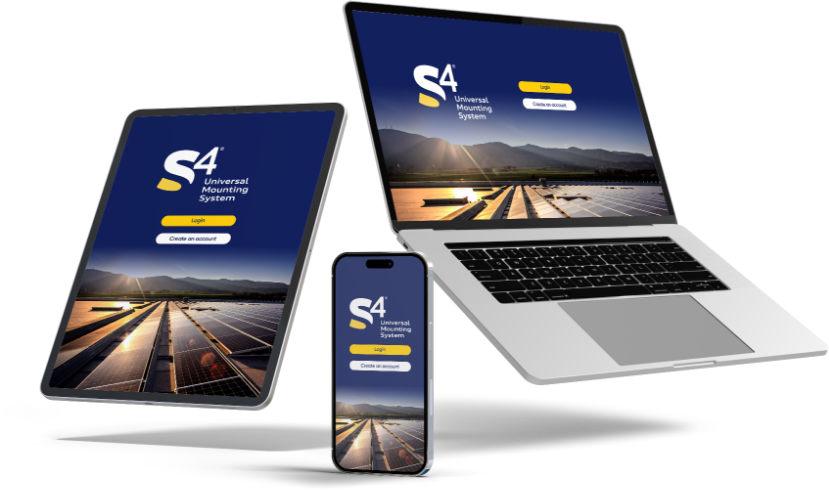
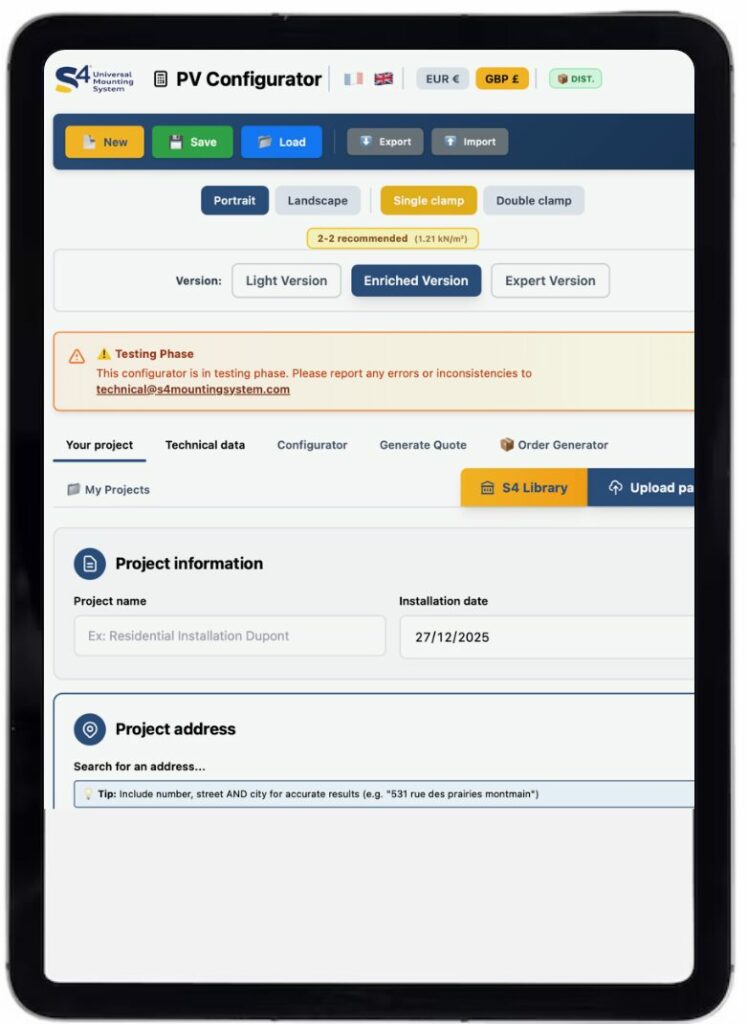
The S4 Configurator has been developed as a central component of the S4 ecosystem, supporting the design, validation, and deployment of photovoltaic systems in full compliance with applicable technical and regulatory frameworks.
More than just a configuration tool, it is a decision-support platform designed to secure projects from the very first stages of planning.
Built to recognized standards
and regulations
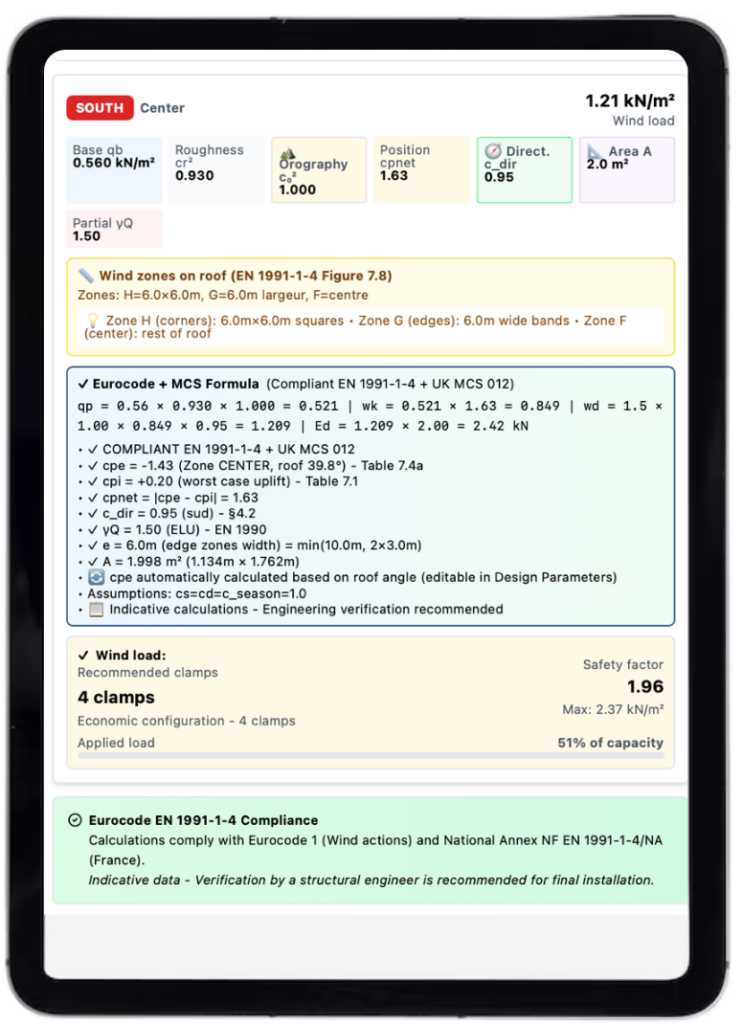
- European Eurocodes and national annexes,
- Relevant British Standards (BS),
- MCS 012 requirements,
- NHBC expectations for new-build housing.
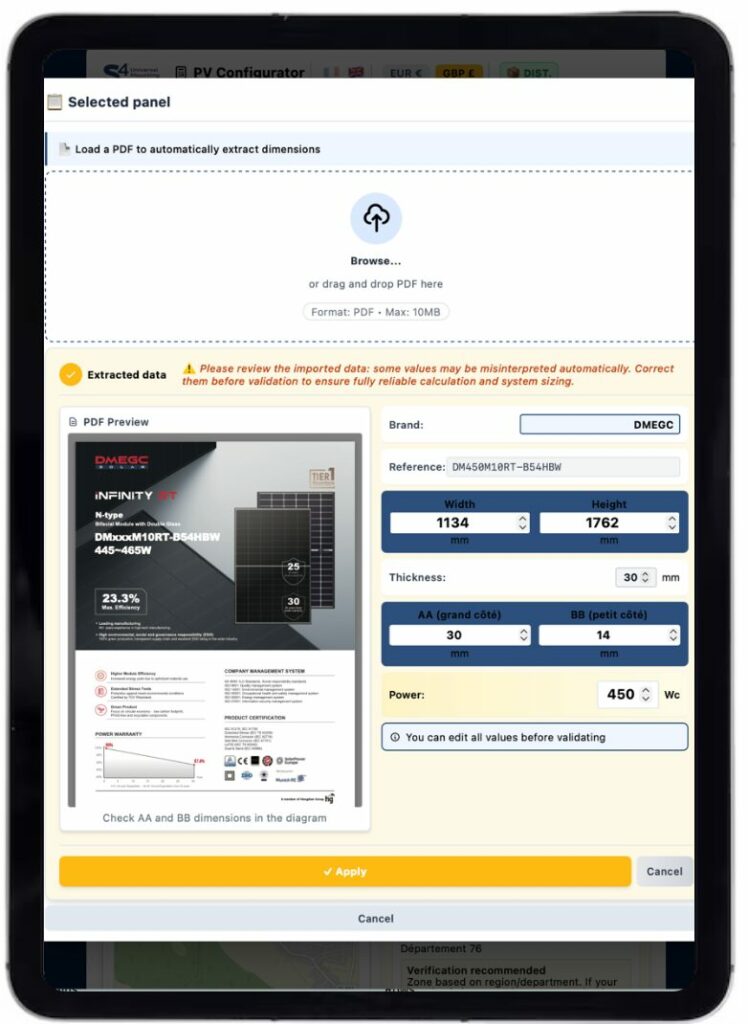
Extensive module database
- Exact physical dimensions and tolerances,
- Frame geometries,
- Fixing interface characteristics,
- Manufacturer-specific constraints.
Designed for real-world
installation conditions
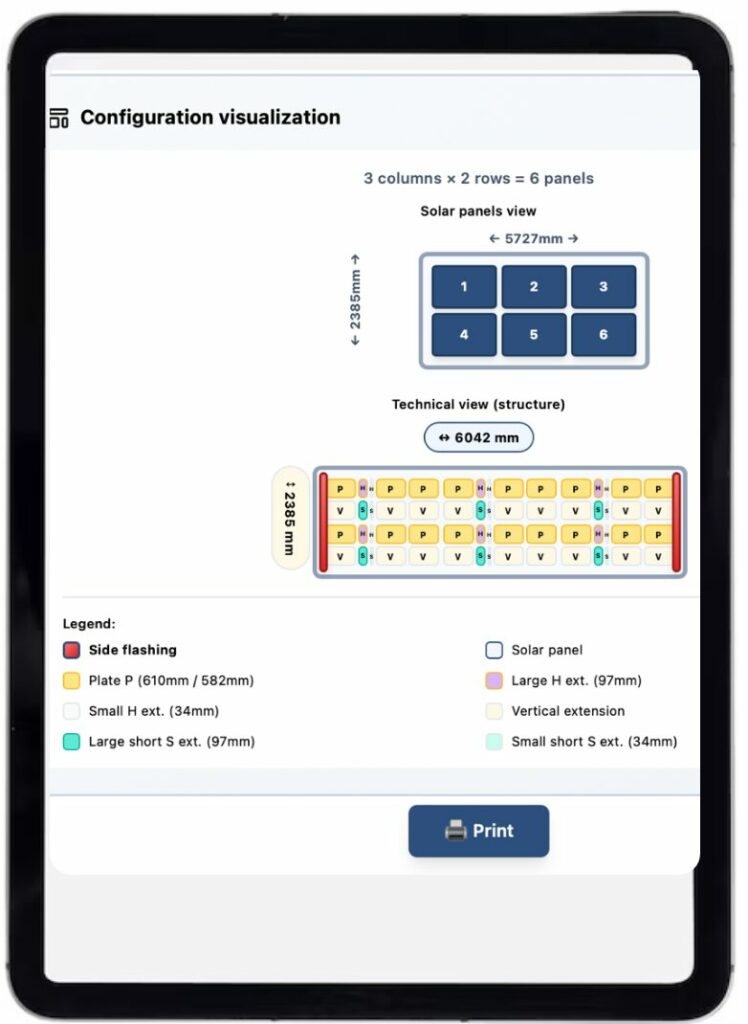
- Portrait and landscape layouts,
- Variable roof geometries and pitches,
- Different fixing strategies and overlap zones,
- Compatibility with roof coverings and drainage principles.
A professional tool supporting compliance and risk control
Important notice – engineering validation
While the S4 Configurator provides a robust technical framework and pre-validation of system compatibility, all final designs, load assessments and structural validations must be reviewed and approved by a qualified structural engineer or competent professional, in accordance with local regulations and project-specific requirements.
This ensures full compliance, safety, and accountability for each individual installation.